Ceiling Leak Water Damage in Garland, TX
A stain spreading across your ceiling means water from a roof, an AC unit, or an upstairs line. The crew traces it to the source, dries the drywall, and checks the electrical risk, 24/7 across Garland.
(214) 935-3936Tap the 24/7 Garland dispatch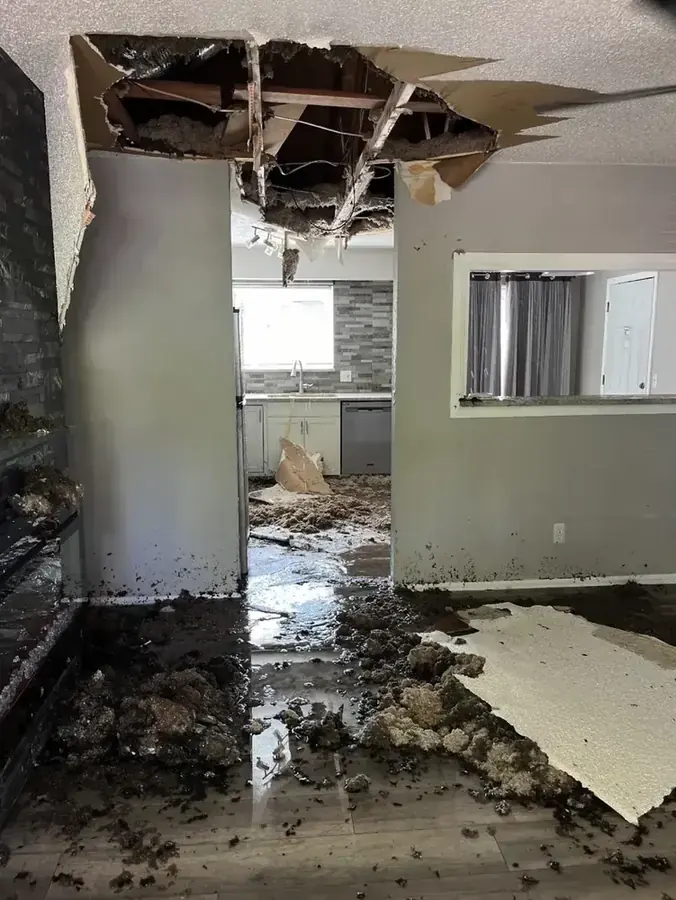
Why Garland calls the local water damage pros first
Rapid local response
The response team answers 24/7, and the nearest crew heads out the moment you call, day or night, across Garland and northeast Dallas County.
IICRC S500 drying standard
Trained crews with truck-mounted extractors, air movers, and moisture meters dry to a verified standard, not a mop and a fan.
Claim-ready documentation
The drying team documents the loss with photos and daily moisture readings, the paperwork an adjuster needs to move a claim.
Local water experts
Clay-soil slab leaks, hail roof leaks, hard-freeze pipe bursts, and AC overflows, so the local pros know how water moves in a North Texas home.
What to do for Ceiling Leak Water Damage in Garland
A few safe steps while a local Garland crew is on the way, day or night.
- 1
Move furniture and electronics out from under the wet ceiling
- 2
Catch drips with a bucket and lay towels to protect the floor
- 3
Find and stop the source above if it is a fixture or supply line
- 4
Call before a soaked ceiling sags and gives way
What does ceiling leak water damage repair cost in Garland, TX?
In Garland, TX, drying ceiling leak water damage typically runs $1,200 to $6,000, depending on the source above and how much drywall and insulation soaked up water.
One ceiling
- A single wet ceiling
- Source traced and dried
Ceiling and wall
- Water tracking into a wall below
- Cavity drying and moisture mapping
Multi-level
- An upstairs line into rooms below
- Full mitigation and rebuild
Every loss is different. For a firm number, try the Water Damage Cost Calculator or call for an on-site scope. The drying team documents the loss for your insurance claim.
How ceiling leak water damage is handled in Garland
Call and dispatch
The response team answers 24/7, and the nearest Garland crew heads out with pumps, air movers, and moisture meters.
On-site assessment
The tech who does the walkthrough finds the source and the full reach of the water, including what soaked into slab, subfloor, and wall cavities.
Extract and dry
The extraction crew pulls the standing water, then runs air movers and LGR dehumidifiers to a verified dry standard, not just the surface.
Verify and document
The crew logs moisture readings daily until the structure is dry, then documents the loss with the photos and readings an adjuster needs to move a claim.
A brown ring or a sagging patch on the ceiling is water that has already traveled. In a Garland home it usually comes from an upstairs bathroom or supply line, an AC unit and its condensate line in the attic, or a roof leak after a storm. Wherever it started, trapped water spreads through the drywall and can reach wiring and light fixtures, so a ceiling leak is more urgent than it looks. The crew finds the source, releases the water safely, and dries the ceiling to a verified standard.
Where a Garland ceiling leak starts
The stain tells you there is water, not where it came from. The usual sources are:
- An upstairs toilet, tub, or supply line dripping into the floor below
- An AC condensate line or drain pan overflowing in the attic
- A roof or flashing leak after hail or wind-driven rain
- A slow supply-line pinhole in the ceiling space
Because the water tracks along joists before it drops, the wet spot is often not under the source. If the leak is coming from the roof envelope, that is roof and storm leak work; if it is the AC, that is AC condensate overflow. The crew traces it before drying it.
How a ceiling leak is handled
ICS Restoration protects the room and dries the ceiling:
- Find and stop the source, from the AC, plumbing, or roof above
- Safely release trapped water so the drywall does not collapse
- Check for wet wiring and fixtures and keep the area safe
- Dry the ceiling, framing, and the wall below with air movers and dehumidifiers
- Document the loss and coordinate any repair or repaint
Fast drying keeps a stained ceiling from sagging, staining further, or growing mold in the North Texas humidity.
Ceiling bulging or dripping? Keep clear of it and call. A Garland crew traces the source and dries it, day or night.
☎ Call (214) 935-3936Why a wet ceiling can be dangerous
A ceiling leak is not just cosmetic. Water and electricity share the same ceiling space:
- Water pooling above a light fixture or fan can energize it
- A ceiling holding trapped water can give way suddenly
- Wet drywall and insulation grow mold within a day or two in summer
Keep the room clear, cut power to affected fixtures at the breaker if you safely can, and call. The Consumer Product Safety Commission warns about water near electrical fixtures, and the drying follows the standards of the IICRC.
Do not poke a bulging ceiling
A ceiling sagging with trapped water can dump gallons at once and pull down drywall. Keep people and pets clear, put a bucket down if it is already dripping, and let the crew release it safely.
Ceiling Leak Water Damage across Garland and northeast Dallas County
Garland water damage pros respond across every Garland ZIP, day or night.
Garland water damage pros cover the whole city, day or night, with rapid local response across northeast Dallas County.
Coverage runs across Garland, Rowlett, Sachse, Wylie, Mesquite, Richardson, Sunnyvale, and northeast Dallas County.
See every neighborhood and ZIP coveredOther Garland water damage services
Ceiling Leak Water Damage questions, answered
Water in your home right now?
Do not wait for the FAQ. A local Garland crew is standing by 24/7.
(214) 935-3936 Call nowHow do you find where a ceiling leak is coming from?
The crew uses moisture meters and thermal imaging to trace the water back along the framing to its source, whether that is the roof, an AC unit, or an upstairs line. Finding the source first means fixing the right problem, not just the stain.
Is a leaking ceiling an emergency?
It can be. A ceiling holding trapped water can collapse, and water near wiring or fixtures is an electrical hazard. Keep clear of a bulging ceiling and call so the crew can release the water safely and check the electrical.
Will the whole ceiling need replacing?
Not always. Dried quickly, much of the ceiling can often be saved and repainted. A ceiling that has sagged, crumbled, or grown mold usually needs the damaged section replaced.
Is ceiling water damage covered by insurance?
If the source is a sudden, accidental leak like a burst line, an AC overflow, or storm roof damage, it is usually covered. The source and the loss are documented, and the covered drying work can be filed directly to your carrier.
How long does a ceiling take to dry?
Most ceilings dry in two to four days with proper equipment, though a heavily saturated ceiling or wet insulation above it can take longer. The crew confirms with moisture readings before pulling the equipment.
Water damage in Garland? Call now.
Water sitting means damage spreading. Call ICS Restoration and a local crew heads out across Garland and northeast Dallas County, day or night.
(214) 935-3936Call now, a local crew picks up day or night