Structural Drying & Dehumidification in Garland, TX
Drying a home is not a fan and an open window. Air movers and dehumidifiers dry wall cavities and slabs to a verified standard, not just the surface, across Garland.
(214) 935-3936Tap the 24/7 Garland dispatch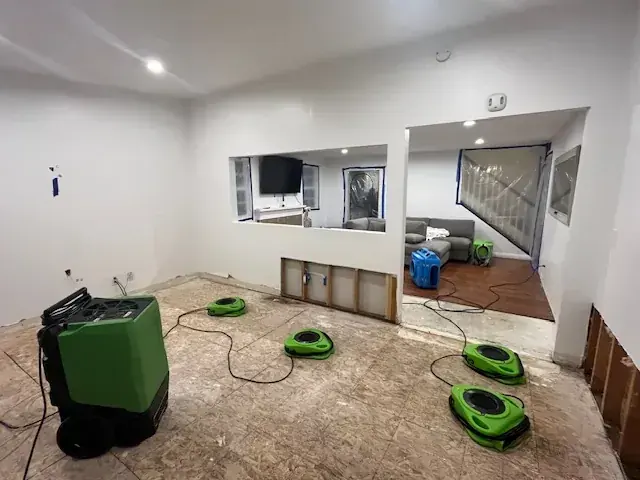
Why Garland calls the local water damage pros first
Rapid local response
The response team answers 24/7, and the nearest crew heads out the moment you call, day or night, across Garland and northeast Dallas County.
IICRC S500 drying standard
Trained crews with truck-mounted extractors, air movers, and moisture meters dry to a verified standard, not a mop and a fan.
Claim-ready documentation
The drying team documents the loss with photos and daily moisture readings, the paperwork an adjuster needs to move a claim.
Local water experts
Clay-soil slab leaks, hail roof leaks, hard-freeze pipe bursts, and AC overflows, so the local pros know how water moves in a North Texas home.
What to do for Structural Drying & Dehumidification in Garland
A few safe steps while a local Garland crew is on the way, day or night.
- 1
Leave the drying equipment running; do not unplug air movers
- 2
Keep windows and exterior doors closed so the dehumidifiers work
- 3
Do not move belongings back until the crew confirms a dry reading
- 4
Call if any equipment stops or you smell mustiness
What does structural drying and dehumidification cost in Garland, TX?
In Garland, TX, structural drying and dehumidification usually runs $1,500 to $6,500, set by how many rooms need equipment, the materials involved, and how many days of monitored drying it takes.
One room
- Air movers and a dehumidifier
- Daily monitored to a dry standard
Several rooms
- Multi-room equipment setup
- Cavity and slab drying
Slab or hardwood
- A saturated slab or wood floors
- Extended monitored drying
Every loss is different. For a firm number, try the Water Damage Cost Calculator or call for an on-site scope. The drying team documents the loss for your insurance claim.
How structural drying & dehumidification is handled in Garland
Call and dispatch
The response team answers 24/7, and the nearest Garland crew heads out with pumps, air movers, and moisture meters.
On-site assessment
The tech who does the walkthrough finds the source and the full reach of the water, including what soaked into slab, subfloor, and wall cavities.
Extract and dry
The extraction crew pulls the standing water, then runs air movers and LGR dehumidifiers to a verified dry standard, not just the surface.
Verify and document
The crew logs moisture readings daily until the structure is dry, then documents the loss with the photos and readings an adjuster needs to move a claim.
After the standing water is out, the real work is getting the moisture out of the structure itself, the drywall, framing, subfloor, and slab that soaked it up. In the North Texas humidity, a home that looks dry on the surface can stay wet inside the walls for days and grow mold while it does. Structural drying is the controlled process that pulls that moisture out and proves the home is dry with meter readings, not guesswork.
Why a fan is not enough
Household fans move surface air, but they do nothing for the water hidden in the structure:
- Moisture trapped in wall cavities and under cabinets keeps wicking
- A saturated slab holds water for days and feeds the air above it
- Humid Texas air outside can add moisture rather than remove it
- Without dehumidification, water just evaporates and re-condenses elsewhere
Proper drying balances air movement with dehumidification and heat, and monitors the whole system so the structure actually reaches a dry standard. This is the step that follows every water extraction job.
How structural drying is handled
ICS Restoration dries to a number, not a guess:
- Set air movers to move air across every wet surface
- Run low-grain refrigerant dehumidifiers to pull moisture from the air
- Use mat systems and injection drying for slabs and wall cavities
- Take daily moisture readings and adjust the equipment
- Confirm a verified dry standard before the gear comes out
Drying to a verified standard is what keeps a water loss from coming back as mold or warped materials weeks later, whether the source was a ceiling leak or a slab leak.
Need your home dried right the first time? Call and a Garland crew sets professional drying today, day or night.
☎ Call (214) 935-3936How long drying takes
Most Garland homes dry in three to five days, though it depends on what got wet:
- Drywall and framing dry faster than a saturated slab or hardwood
- A larger area or trapped moisture in cavities takes longer
- The drying team monitors daily and finishes only when the readings confirm it is dry
Drying quickly matters most in the summer, when a damp cavity can grow mold within a day or two. The EPA notes the 24 to 48 hour window for drying wet materials, and the work follows the standards of the IICRC for applied structural drying.
Dry to a reading, not to a feeling
A surface can feel dry while the framing behind it is still soaked. The crew takes moisture readings until the structure hits a verified dry standard, which is the only way to know the job is truly finished.
Structural Drying & Dehumidification across Garland and northeast Dallas County
Garland water damage pros respond across every Garland ZIP, day or night.
Garland water damage pros cover the whole city, day or night, with rapid local response across northeast Dallas County.
Coverage runs across Garland, Rowlett, Sachse, Wylie, Mesquite, Richardson, Sunnyvale, and northeast Dallas County.
See every neighborhood and ZIP coveredOther Garland water damage services
Structural Drying & Dehumidification questions, answered
Water in your home right now?
Do not wait for the FAQ. A local Garland crew is standing by 24/7.
(214) 935-3936 Call nowHow is structural drying different from using fans?
Fans only move surface air. Structural drying combines air movers with commercial dehumidifiers and monitoring to pull moisture out of walls, subfloor, and slabs, then verifies the structure is dry with meter readings.
How long will the equipment run in my home?
Usually three to five days, longer for a saturated slab or hardwood. The equipment runs continuously during that time, and the crew takes daily readings to track progress and adjust it.
Is the drying equipment loud or disruptive?
Air movers and dehumidifiers do make noise and give off some warmth, but they are far less disruptive than the demolition that follows a home dried improperly. Most homeowners stay in the home while it dries.
How do you know when my home is dry?
The crew takes moisture readings with meters throughout the drying and removes the equipment only once the readings confirm the structure has reached a verified dry standard, not just a dry-feeling surface.
Does structural drying prevent mold?
Drying the structure quickly and thoroughly is the single best way to prevent mold, because mold needs trapped moisture to grow. That is why the crew dries to a verified standard rather than letting a home air out.
Water damage in Garland? Call now.
Water sitting means damage spreading. Call ICS Restoration and a local crew heads out across Garland and northeast Dallas County, day or night.
(214) 935-3936Call now, a local crew picks up day or night